How to Build a Virtual Summit Funnel That Turns Visitors Into Attendees
Introduction
Getting people to visit your Virtual Summit website is only the beginning.
The real challenge is turning those visitors into registered attendees who actually show up when your event goes live.
You can have amazing speakers, valuable sessions, and an impressive event platform, but if your funnel is confusing or your registration process creates friction, potential attendees can disappear before they ever register.
That is why a well-designed summit registration funnel matters.
A good Virtual Summit funnel doesn't simply ask people to register. It takes them through a logical journey from discovering your event to understanding its value, registering, remembering the event, and finally attending.
In this guide, you'll learn how to build that journey step by step.
What Is a Virtual Summit Funnel?
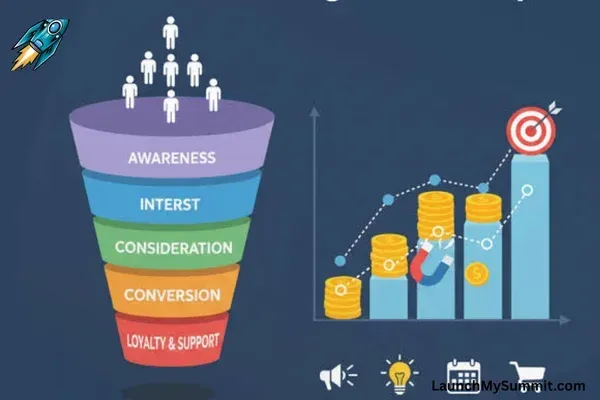
A Virtual Summit funnel is the series of pages, messages, offers, and follow-up steps that move someone from being a casual visitor to becoming an event attendee.
Think of it as a guided path.
A typical funnel might look like this:
Traffic → Landing Page → Registration → Confirmation → Reminder Emails → Event → Follow-Up
Each stage has a specific job.
The landing page needs to capture attention. The registration page needs to remove hesitation. Confirmation needs to reinforce the decision. Reminder campaigns need to keep the event on the attendee's radar.
When all these pieces work together, your event funnel becomes much more than a registration page it becomes a system for increasing attendance.
Step 1: Start With a Clear Summit Promise
Before building pages or writing emails, define why someone should care about your Virtual Summit.
Your visitors are probably asking:
What's in it for me?
Why should I attend?
Who are the speakers?
What will I learn?
Is this worth my time?
When is it happening?
Your headline should answer the most important question immediately.
Instead of a generic headline like:
"Join Our Virtual Summit"
make the benefit more specific.
For example:
Learn the strategies top coaches are using to grow their business in 2026.
The second version gives visitors a reason to continue.
Your summit promise should connect the event with a specific problem, goal, transformation, or opportunity.
## Step 2: Build a Landing Page Around Benefits
Your landing page is one of the most important parts of your Virtual Summit funnel.
Don't overload it with unnecessary information. You need to give visitors to your website information so they can make a decision that they feel good about. The landing page should tell them everything they need to know about the benefits. This way visitors to the landing page will have all the information they need to make a decision, about the benefits.
A strong summit landing page can include:
A compelling headline
Tell visitors what the summit is about and why it matters.
A short supporting statement
Explain who the event is for and what they can expect.
The date and event details
Make the event date, time, format, and registration information easy to find.
Speaker information
Showcase speakers who add credibility and excitement.
Session highlights
Don't just list session titles. Explain what attendees will learn from them.
Clear call-to-action
Your registration button should be obvious.
Use action-oriented language such as:
Reserve My Free Seat
Save My Spot
Register for the Summit
The goal is to make the next step feel natural.
Step 3: Make Registration Extremely Simple
One of the easiest ways to lose potential attendees is to make registration complicated.
If someone has already decided they want to attend, don't make them complete a huge form.
For most Virtual Summit events, ask only for information you genuinely need.
A simple registration form might request:
First name
Email address
Optional phone number
Any information required for your specific event
Every additional field creates another opportunity for someone to abandon the process.
Your summit registration funnel should make registration feel quick and effortless.
Step 4: Create a Strong Confirmation Experience
Registration isn't the finish line.
It is the beginning of the attendee relationship.
After someone registers, send them to a confirmation page that clearly tells them what happens next.
Your confirmation page can include:
Registration confirmation
Event date and time
Calendar reminder options
Speaker highlights
Instructions for accessing the event
Social sharing options
An invitation to explore a relevant offer
This is also a great opportunity to increase anticipation.
Instead of simply saying:
"You're registered."
you can say:
"You're in! Here's how to make sure you don't miss the sessions that matter most to you."
That small change makes the experience feel more personal.
Step 5: Use Email to Turn Registrations Into Attendance
One of the biggest mistakes event hosts make is assuming registration automatically means attendance.
It doesn't.
People register for events and forget about them.
That's why your follow-up sequence is critical.
A simple Virtual Summit reminder sequence could include:
Immediately after registration
Confirm their registration and provide the key event details.
One week before
Remind them about the event and highlight the value they will receive.
Three days before
Introduce some of the most exciting speakers or sessions.
One day before
Give them a simple reminder with the event date and access information.
The morning of the event
Send a short, direct reminder.
Shortly before the event
Send a final message telling them the event is about to begin.
Your reminders don't need to be long.
The purpose is to keep the event fresh in their mind.
Step 6: Build Excitement Before the Event
A great event funnel doesn't simply remind people that an event exists.
It gives them reasons to look forward to it.
Share small pieces of valuable content before the summit.
For example, you could send:
Speaker introductions
Short video clips
Session previews
Practical tips
Behind-the-scenes content
Questions attendees should think about
Speaker quotes
Event countdowns
This creates anticipation.
When people feel excited about an event before it starts, they're more likely to protect the time on their calendar.
Step 7: Make Your Speakers Part of the Funnel
Your speakers can become powerful traffic and conversion assets.
Give every speaker easy-to-share promotional materials, including:
Registration link
Social media graphics
Suggested captions
Email copy
Speaker announcement images
Short promotional videos
When speakers actively promote the summit to their own audiences, your funnel receives traffic from multiple sources.
That can dramatically expand your reach without requiring you to generate every visitor yourself.
Step 8: Reduce Friction at Every Stage
Look at your entire funnel from the visitor's perspective.
Ask yourself:
Can I understand this event within five seconds?
Can I immediately see why I should attend?
Is registration easy?
Do I know what happens after I register?
Will I remember when the event starts?
Can I easily access the event?
Every unnecessary step increases friction.
A high-performing event funnel should feel simple.
Visitors shouldn't have to figure out what to do next.
Your pages, buttons, emails, and reminders should guide them naturally.
Step 9: Connect Your Funnel to the Right Technology
The technology behind your Virtual Summit can make managing registrations, reminders, speakers, and attendees much easier.
Your setup might include:
Landing page software
Registration forms
Email automation
CRM
Calendar integrations
Webinar or streaming software
Analytics
Payment tools if your summit includes paid upgrades
Choosing the right technology depends on the size and complexity of your event.
If you're comparing tools for your next event, check out our guide to Virtual Summit software in 2026 for a deeper look at the technology options available to summit hosts.
The important thing is not to use technology simply because it has lots of features.
Use technology that makes the attendee journey easier.
Step 10: Track What Happens After Registration
Your funnel should be measurable.
At minimum, track:
Landing page visitors
Registration conversion rate
Email open rates
Email click-through rates
Registration source
Attendance rate
Session engagement
Offer conversions
Post-event engagement
For example, suppose 5,000 people visit your landing page and 500 register.
That's a 10% registration conversion rate.
But if only 100 people attend, your bigger problem may not be traffic or registration it may be your reminder and engagement strategy.
This is why looking at the entire funnel matters.
Common Virtual Summit Funnel Mistakes
Even strong events can lose registrations and attendees because of simple funnel mistakes.
Too much information
Don't bury your main value proposition under paragraphs of unnecessary copy.
Weak calls-to-action
"Learn More" is usually less compelling than a clear registration-focused CTA.
Complicated forms
Ask for the minimum information needed.
No reminder strategy
Registration without follow-up often leads to missed attendance.
Forgetting mobile users
Your funnel should work smoothly on smartphones and tablets.
No clear next step
Every page should tell visitors what they should do next.
Final Thoughts
A successful Virtual Summit doesn't happen simply because you have great speakers or valuable content.
You also need a journey that makes it easy for the right people to discover your event, understand its value, register without hesitation, and remember to attend.
Your summit registration funnel should remove friction while your event funnel builds excitement and trust.
Start with a clear promise. Create a focused landing page. Simplify registration. Follow up consistently. Use speakers to expand your reach. Then measure every stage of the attendee journey.
The goal isn't just to get more visitors.
It's to turn the right visitors into registered attendees and registered attendees into people who actually show up, engage, and remember your Virtual Summit.